Three to receive 2016 Distinguished Service Awards at Golf Industry Show


LAWRENCE, Kan. -- Golf Course Superintendents Association of America (GCSAA) leaders David Fearis and Paul McGinnis, and longtime Penn State University professor Al Turgeon have been selected to receive the association's 2016 Col. John Morley Distinguished Service Award.
The three will be recognized at the 2016 Golf Industry Show, on Feb. 9 during the Opening Session, presented in partnership with Syngenta, at the San Diego Convention Center.
The award is given to individuals who have made an outstanding, substantive and enduring contribution to the advancement of the golf course superintendent profession. The award was renamed in 2009 in honor of Col. John Morley, GCSAA's founder and first president. He was the first to earn the Distinguished Service Award, in 1932, and he received it again in 1940.
"These gentlemen embody what the Col. John Morley Distinguished Service Award represents," said GCSAA President John O'Keefe. "They have made significant contributions to the game of golf and have dedicated themselves to the advancement of the superintendent profession through teaching and leadership."
Fearis, 68 and retired, was a golf course superintendent for 29 years, earning the distinguished title of certified golf course superintendent (CGCS). A graduate of Purdue University, he started in the profession as superintendent at the Country Club of Peoria (Ill.), but became totally immersed in his career when he landed the superintendent job at Blue Hills Country Club in a suburb of Kansas City, Mo.
"I am honored and flabbergasted to receive this award," said Fearis, who served on the GCSAA board with McGinnis. "It is an extra special honor to be recognized alongside Paul (McGinnis). I was always taught to give back what was given to you, and I hope I have done that. It all has been a very rewarding experience.";
Fearis served as a GCSAA board member for eight years and was president of the association in 1999. He has also been active in the Heart of America GCSA, the Central Illinois GCSA, The First Tee of Kansas City, the Midwest Regional Turf Foundation and the Illinois Turfgrass Foundation.
McGinnis, a CGCS and the 64-year-old director of golf course maintenance at Pebble Creek Golf Resort in Pebble Creek, Ariz., has been a GCSAA member for 38 years. He served on the association's board of directors for nine years, including a term as president in 1997. He has also been a three-time president of the Cactus and Pine GCSA.
McGinnis is passionate about the role superintendents play in environmental stewardship. He served on the Governor's Panel for Water Conservation and is currently a Grassroots Ambassador for GCSAA, a program that seeks to link superintendents with a member of Congress to improve communication on behalf of the golf industry.
"Having been on the GCSAA board and knowing first hand what they are looking for makes this really special," said McGinnis. "I am incredibly honored and humbled. I am not sure what I did to deserve this, but I will sure enjoy it. It's a great day when you get that kind of call from the president."
Turgeon, 72, has been educating students in turfgrass management for four decades. After earning his Ph.D. from Michigan State University, he started as head of the agronomy department at Penn State in 1986 and today holds the position of professor emeritus. His teaching career has brought him significant recognition, but none more than being named one of the top 10 contributors in turfgrass science over the past 50 years by the Crop Science Society of America.
In addition, Turgeon received the Distinguished Service Award from the Illinois Turfgrass Foundation and was recognized with an Outstanding Teacher award from Penn State. A longtime GCSAA member, he has taught education sessions at the annual Golf Industry Show from 1975 to 2012.
"This award is quite an honor and quite a surprise," said Turgeon, who taught the first education seminar at GIS in 1975, in New Orleans. "It is totally unexpected, but it is nice to be recognized when you have given your life to a profession. It is been a great ride, and I have enjoyed every minute of it. I feel I have gained more than I have given to the teaching profession."
The GCSAA Board of Directors selects the winners from nominations submitted by affiliated chapters and/or association members.

How Much Is Tiger Woods Worth?


Tiger Woods has fallen a long way from the top in recent years. Rocked by a public infidelity scandal in 2009, the golf superstar has had not just his reputation tarnished, but he also has yet to regain his top form, He hasn't won a major event since 2008. As a result, both his net worth and income have suffered. Having said that, he still was one of the 10 highest-paid athletes last year and he still has a net worth most of us won't even attain in our wildest dreams.
Tiger Woods by the numbersBecause of lingering injuries, Woods has only made the cut in seven of his past 13 events, which is a startling fall for a player who once made a record 142 straight cuts. However, despite not performing as well as he once did, Woods still made $50.6 million this year, according to Forbes. That ranks him as the ninth highest-paid athlete in the world and the second highest-paid golfer behind Phil Mickelson at $50.8 million. Those earnings have pushed Woods' total career earnings up to more than $1.37 billion since turning pro. He's likely on his way to making more than $2 billion before all is said and done.
That being said, Tiger Woods is not a billionaire today. And while how much Tiger Woods is worth is still open to debate, he is thought to have a current net worth of around $600 million, the bulk of which has come from endorsement deals and not from golf earnings. In fact, Forbes pegs his tournament prize money at just $600,000 this year, while in his best year he earned only $10.8 million playing golf and his career earnings from the PGA Tour are just a shade over $100 million. On the other hand, Woods' biggest endorsement deal is with Nike, which he has been with since turning pro in 1996, and it is estimated to pay him as much as $20 million per year. The company is one of the few that have remained with Woods since his scandal broke, as well as in spite of his poor play in recent years.
Tiger Woods could be worth much more
Speaking of Woods' scandal, it has significantly tarnished his reputation, cut deeply into his earnings, and took a huge chunk out of his net worth. While we can't put a price tag on his reputation, we can say that Woods his deals with the likes of Accenture, AT&T, PepsiCo, Gillette, and Electronic Arts, many of which surely valued his reputation as much as, if not more than, his ability to play golf. While Woods has attempted to rebuild his endorsement empire in the years since the scandal broke, his $50.6 million in earnings this year will be well off his peak in 2007m when he earned $122.7 million. Meanwhile, his now ex-wife, Elin Nordegren, was awarded $110 million as part of their divorce settlement, taking a big chunk of his net worth.
Woods is no longer the superstar he once was on or off the field. However, he has tried to rebuild his financial empire by signing new endorsement deals in recent years, including an $8 million-a-year deal with Indian motorcycle and scooter company Hero. However, while Woods isn't exactly hurting financially, he's a long way from his former peak.
TakeawayClearly, Tiger Woods is worth a whole lot of money, but he has lost a lot in recent years because of his infidelity scandal. His reputation, income and net worth have all experienced serious blows. That's a life lesson to us all, and the lesson isn't to avoid getting caught, but to avoid the situation in which one's reputation can be tarnished entirely. It's just not worth it, and as we can see from Tiger Woods' own experience, it's hard to clean up a tarnished reputation -- not to mention the potential impact that can have on one's net worth.
The other takeaway is that Tiger Woods makes far more money outside his day job playing golf. It's a subtle reminder that there's often money to be made in things relating to our jobs -- such as consulting, for example -- that can have a big impact on one's net worth.

Sergio Garcia and Darren Clarke sign up for new event


Sergio Garcia, Darren Clarke and Thomas Bjorn donned their evening suits to launch a new tour event in Asia in December. 
They will play in the Ho Tram Open at a spectacular new links coure in Vietnam. 
According to Sergio: “Vietnam has always been an intriguing destination for golf and one I have been paying close attention to. We are blessed with a lot of great tournaments around the world, but the opportunity to experience a new destination, a new course and a new challenge is very appealing to me.”
“This is great news for sports fans in Vietnam and for the Ho Tram Open,” commented Ben Styles, Vice President Golf & Residential. “Sergio has been one of golf’s most charismatic figures and he will give us considerable impetus in putting the destination on the map.”
In addition to Sergio and Clarke, Robert Rock, former US Open Champion Geoff Ogilvy, Ryder Cup legend Thomas Bjorn and Vietnam’s No.1 Michael Tran will be joining the Asian Tour’s best for the event from December 3-6. 
“Sergio is at the pinnacle of the sport, which coupled with his charismatic style and his spirit of entertainment give us the perfect package for the Ho Tram Open,” said Jed Moore, Tournament Promoter Ho Tram Open. “The event will be a great advert for Vietnam and Ho Tram and with Sergio’s addition gives us even greater potential.”
Since opening in October 2014, the links-style layout located two hours southeast of Ho Chi Minh City has been hailed by many of the world’s leading authorities on golf. In January, GOLF Magazine named it one of the world’s best new courses. In July, the Australian Financial Review called it “as pretty a course as you’ll find on the entire Asian continent.”
For more information about the Ho Tram Open including player bios and sponsorship options, visitwww.hotramopen.com and follow @HoTramOpen.
If you happen to be in Vietnam in December, tickets are free and can be downloaded on the Ho Tram Open website www.hotramopen.com

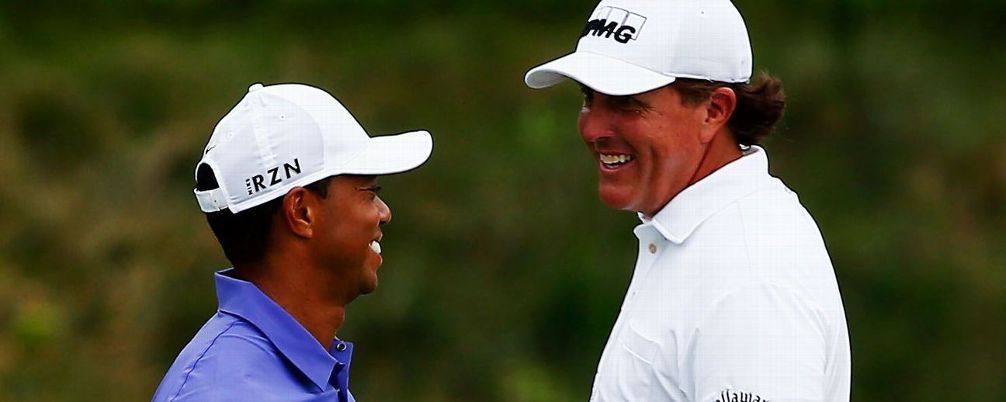
Pondering Tiger and Phil as future Ryder Cup captains


It was sometime during Phil Mickelson's undefeated Presidents Cup week that Tiger Woods, according to a Golf Digest report, called Fred Couples. Couples in turn passed the phone over to Ryder Cup captain Davis Love III, who listened as Woods reportedly said that he'd been thinking about strategy for next year's proceedings at Valhalla and wants to be included as part of the team in some way
.
Those two actions -- Woods' call and Mickelson's performance -- were independent of one another. Yet because this is golf and because they just happen to be the two biggest lightning rods in the game over the past two decades, they converged into a rapidly percolating hot-button issue: Should Tiger and Phil be Ryder Cup captains someday?

This is the type of question that fuels the talk-show circuit for hours on end, every interested observer offering a viewpoint that can't be immediately affirmed or expunged. In fact, even if each of them ends up serving in the role, we might still argue whether they were right for the job or were simply handed the position because of their elevated status as players.

Too bad there's an easy answer: of course they should.

Say what you will about ousted PGA of America president Ted Bishop, but he changed the game. The role of Ryder Cup captain had previously served as a way of honoring the greatest players. Everybody step up, take your turn at bat, then let another guy have a chance. (Except for you, Larry Nelson. Never you.) That didn't mean the powers-that-be didn't want to win, only that they wanted to keep the position as a revolving door for the next legend who fit the criteria of being 50-55 years old and having played on multiple teams.

The appointment of Tom Watson could be filed under "unmitigated disaster," but it did prompt a change in the evolution of the captaincy. Since the U.S. has won just a single Ryder Cup this century, there is now a blueprint to install the best person available, revolving door be damned.
All of which gets us back to Tiger and Phil.

Some contend that because each owns a subpar Ryder Cup record and has suffered through a losing culture during the latest era, both should be bypassed for the captaincy. Which makes no sense. That would be analogous to an NFL team hiring only a coach who had won the Super Bowl as a player, rather than the best man for the job.

Now, I've long advocated for the PGA of America to name a permanent captain, much like other national teams -- perhaps in conjunction with the PGA Tour, and including the Presidents Cup, too. It would retain a semblance of consistency that teams have lacked from one competition to the next each year.

If that doesn't happen, though, then of course the two winningest and most respected American players of the past two decades should be offered opportunities to lead the team. Just as players of past generations might have felt a little extra motivation to win -- or, at least, not lose -- for men such as Jack Nicklaus and Arnold Palmer, Woods and Mickelson would instill similar attitudes in team members.

If there's a line of demarcation separating U.S. players from their European counterparts, it's that the former value individual accomplishments, especially major championships, more than these team events, while the latter have often prioritized winning as a team. That shouldn't be viewed as a major criticism of the Americans, though -- and it shouldn't keep the two biggest names from future captaincies.

The role is no longer an honor for legendary players, but that's not what Woods or Mickelson would want anyway. Just because they might not have wanted to win Ryder Cups more than, say, green jackets, that doesn't mean they didn't want to win. It also doesn't mean they aren't the right men for the job -- someday.

Comienza la invasión del Club de Campo de Madrid: Carmena se carga al director


La alcaldesa de Madrid, Manuela Carmena, ha destituido al director gerente del Club de Campo de Madrid, Alfonso Segovia, tras el consejo de administración que ha celebrado la entidad. Carmena pretende que el Club se convierta “en un parque público”, lo que ha provocado la disconformidad de los abonados del club que pagan religiosamente sus cuotas.

La alcaldesa de Madrid ha hecho alarde de su vena autoritaria y ha destituido al director del Club de Campo Villa de Madrid, Alfonso Segovia, comenzando la invasión de la institución deportiva que está siendo capitaneada por la nueva presidenta y delegada de Cultura y Deportes municipal, Celia Meyer.

Según ha podido saber Okdiario, Meyer intentó destituir a Segovia antes del consejo de administración que se celebró ayer, a lo que el director se negó por ir contra los Estatutos de la entidad. Tras la reunión de los consejeros, a la que asistió Segovia, se ha producido su despido en el día de hoy.

Carmena pretende que el Club se convierta “en un parque público”, lo que ha provocado la disconformidad de los abonados del club que pagan religiosamente sus cuotas.  La alcaldesa quiere que la institución sea un lugar donde se reciban visitas de escolares y unir con una carretera el Club con la Casa de Campo. Todo ello deberá ser sufragado por los abonados, bien mediante un aumento de las cuotas o con la prestación de menos servicios.

Los socios temen que el club sea una víctima más de la ofensiva de Carmena por ceder espacios a organizaciones okupas, como los del Patio Maravillas, que han solicitado la cesión municipal de un edificio histórico en la madrileña calle de Alberto Aguilera. Por ello, los abonados estudian organizarse para defender sus intereses ante la toma de control que está haciendo Carmena de la institución deportiva.

Antes del verano Manuela Carmena tomó por las bravas el máximo órgano de gobierno del Club de Campo de Madrid, al situar a Meyer de presidenta y sentar en la mesa del consejo de administración al concejal de Hacienda, Carlos Sánchez Mato, anticapitalista reconocido que ha roto el contrato con las agencias de calificación crediticia, con las auditoras internacionales y que ha iniciado una ola de nacionalizaciones en la economía de la capital.

Otros miembros del consejo nombrados por Carmena son a la concejala de Medio Ambiente, Inés Sabanés, el director general de Deportes, Francisco Javier Odriozola y la directora general de Sector Público, Marta Fernández-Pirla. Un desembarco en toda regla para tomar posesión de las 200 hectáreas de instalaciones que tiene el Club.

La institución se financia mediante las cuotas de sus socios (que aportan unos 22 millones de euros anuales), dinero que sirve para pagar a los 300 empleados, las instalaciones hípicas, los 36 hoyos de golf, la escuela de tenis, los dos campos de hockey, las piscinas al aire libre y los servicios de restauración. Todo ello peligra con la llegada de Carmena a la alcaldía.

Alfonso Segovia había tendido puentes con el ayuntamiento para intentar frenar el golpe y conciliar los intereses municipales y de los abonados. El ex director había manifestado que todos los ciudadanos que así lo desearan podían acceder al Club pagando una justa cuota de siete euros para utilizar las instalaciones. Hasta ahora Segovia estaba tranquilo porque pensaba que su posible cese debería aprobarse por todos los partidos, pero la cacicada de Carmena le ha expulsado de la institución.